Extraction of Wisdom Teeth
Wisdom teeth, or third molars, are the last teeth to develop and appear in the mouth. They are called "wisdom teeth" because they usually appear during a person's late teens or early twenties, which has been called the Age of Wisdom. The normal position of wisdom teeth is behind the upper and lower second molars. Many times the jaws of modern humans are not large enough to accommodate the four wisdom teeth. This is why wisdom teeth cause more problems than any other teeth in the mouth. In
fact, for nine out of ten people, at least one wisdom tooth remains underneath the gum due to lack of space in the mouth.
Wisdom Teeth
- What Are Wisdom Teeth?
- Impacted Wisdom Teeth
- How Wisdom Teeth are Treated
- Before the Surgery
- Preparing for your surgery
- During the Surgery
- Anesthesia
- The surgery procedure
- Immediately following surgery
- After the Surgery
- What to Expect after your surgery
- Diet after your surgery
- During your healing process
- Known Risks and Complications
Wisdom teeth, or third molars, are the last teeth to develop and appear in the mouth. They are called "wisdom teeth" because they usually appear during a person's late teens or early twenties, which has been called the Age of Wisdom. The normal position of wisdom teeth is behind the upper and lower second molars. Many times the jaws of modern humans are not large enough to accommodate the four wisdom teeth. This is why wisdom teeth cause more problems than any other teeth in the mouth. In fact, for nine out of ten people, at least one wisdom tooth remains underneath the gum due to lack of space in the mouth.
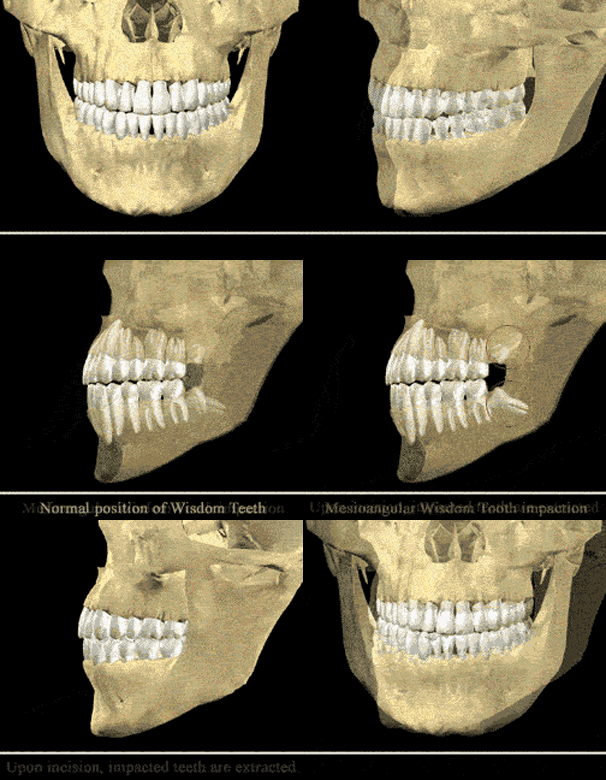
When a wisdom tooth is blocked from erupting or coming into the mouth normally, it is termed impacted. A tooth may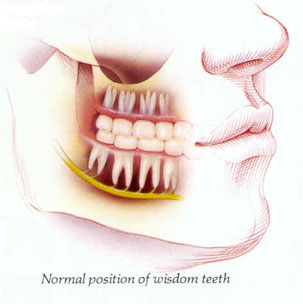 be only partially impacted, meaning it grows in crooked and breaks through the gum only partially. Serious problems can develop from impacted teeth, such as pain, infection, and crowding of, or damage to, adjacent teeth. For totally impacted teeth, more serious problems can occur if the sac that surrounds the impacted tooth fills with fluid and enlarges to form a cyst. This enlargement can hollow out the jaw and result in permanent damage to the adjacent teeth, jawbone and nerves. If
the cyst is not treated, a tumor may develop from the walls of the cyst and a more involved surgical procedure may be required for removal.
Many problems with wisdom teeth can occur with few or no symptoms, so there can be damage without your knowing it. It is important to know that as wisdom teeth develop, their roots
become longer and the jawbone more dense. Thus, as a person grows older, it becomes more difficult to remove wisdom teeth and complications can become more severe. In addition, as people age there is an increased chance of the symptoms mentioned above. For these reasons, the surgeon may recommend the removal of wisdom teeth even if they are not yet causing
obvious problems, particularly for young adults.
be only partially impacted, meaning it grows in crooked and breaks through the gum only partially. Serious problems can develop from impacted teeth, such as pain, infection, and crowding of, or damage to, adjacent teeth. For totally impacted teeth, more serious problems can occur if the sac that surrounds the impacted tooth fills with fluid and enlarges to form a cyst. This enlargement can hollow out the jaw and result in permanent damage to the adjacent teeth, jawbone and nerves. If
the cyst is not treated, a tumor may develop from the walls of the cyst and a more involved surgical procedure may be required for removal.
Many problems with wisdom teeth can occur with few or no symptoms, so there can be damage without your knowing it. It is important to know that as wisdom teeth develop, their roots
become longer and the jawbone more dense. Thus, as a person grows older, it becomes more difficult to remove wisdom teeth and complications can become more severe. In addition, as people age there is an increased chance of the symptoms mentioned above. For these reasons, the surgeon may recommend the removal of wisdom teeth even if they are not yet causing
obvious problems, particularly for young adults.
Treatment of impacted wisdom teeth involves their removal using special surgical techniques appropriate for each individual case. A dentist who has specialized training in the removal of wisdom teeth is called an oral and maxillofacial surgeon. If the wisdom teeth have fully erupted in normal position, they may be observed by your dentist during your regular visits to ensure that you are properly cleaning them and no problems are developing, such as decay or crowding of your teeth.
The removal of wisdom teeth can be performed on an out-patient basis, usually in the dental office, or in rare cases, in a hospital setting. If the tooth is impacted, an incision is made in the gum tissue and the tissue is turned back so the tooth can be seen. If bone is covering the tooth, it may need to be removed in order to expose and extract the tooth. The tooth may be removed whole, or in some cases it may be cut into sections, and each section is then individually removed. Usually the surgical procedure will take up to one hour, although this varies according to each case. Afer surgery you will spend some time in recovery before going home. In most cases normal activities can be resumed within a few days depending on the degree of impaction and the number of teeth removed.
Before the Surgery
Examination
Before the surgery an x-ray will be obtained to show the presence of the impacted teeth and to reveal such important things as curved roots, proximity to the nerve and other abnormalities in the tooth position. A full medical history will be taken, with particular attention to allergies, medications or health problems that might affect surgery and/or administration of anesthesia. The surgeon will examine your mouth for any signs of swelling or infection, and will check your blood pressure and certain other vital signs in order to determine the type of anesthesia to use during surgery. It is important that you provide complete information, particularly about medications you may be taking, so the surgeon has an accurate assessment of your health prior to recommending surgery.
The following are tips to help you prepare for your surgical appointment:
- Clothing. Wear loose, comfortable clothing with sleeves that can be easily rolled up. If you are to be given an intravenous anesthetic, tight sleeves can make this difficult.
- Transportation. Arrange to have someone accompany you to your surgery appointment and drive you home afterwards. You may be drowsy for a while after anesthesia, and driving yourself is unsafe. It is absolutely necessary to have a driver.
- Diet. If intravenous anesthesia will be administered, do not eat or drink for at least 6 hours prior to your surgery appointment.
- Medications. Adhere to any medication schedule that is prescribed by the surgeon prior to surgery. For example, antibiotics may be prescribed in certain cases to eliminate any infection that may otherwise complicate surgery and healing. Your surgeon will explain any medication schedule that is needed for your individual case, and usually will instruct you to take your regular medication with a sip of water in the morning before the surgery.
What to Expect during Surgery
Anesthesia. Modern anesthesia technology now makes it possible to perform even complex surgery in the dental office with little or no discomfort. During surgery, one or more of the following is used to control pain and anxiety: local anesthesia that numbs the surgical area; nitrous oxide (sometimes called laughing gas) to relax you; intravenous sedation to both relax you and make you sleepy; and general anesthesia that puts you to sleep. Your surgeon will fully explain the type of anesthesia that is most appropriate for your needs.
If the teeth have fully erupted, it is possible to simply remove each tooth intact from its socket in the bone. If gum tissue is covering the tooth, an incision will be required to turn back the gum and expose the tooth. Likewise, if bone covers the tooth, the surgeon will remove sufficient bone to expose the tooth and allow its removal.
If an incision through the gum tissue is needed to gain access to an impacted tooth, the surgeon may place some sutures (stitches) at the end of the procedure to hold the tissue together and aid healing. These stitches usually dissolve on their own after surgery.
If your surgery was performed in the dental ofice or hospital outpatient facility, you will probably rest for some time before you are driven home by your companion. during this recovery time your condition will be monitored.
After your Surgery
We will give you specific instructions to follow after surgery is completed. You can expect some bleeding for a while, and you will probably be asked to bite gently on gauze for a few hours after surgery to allow a blood clot to form in the extraction sites. Even a little blood can seem like a lot to you, so don't be alarmed by gentle oozing of blood for a few hours after surgery. However, if bleeding is excessive after you return home, contact your surgeon immediately for instructions.
Ice packs applied to the face following surgery will help to reduce swelling, but expect some swelling to occur during the normal healing process. This swelling may increase for the first 48 to 72 hours and then begin to subside. There may be some discoloration of the skin during healing, first black-blue in color, then turning yellow and disappearing in a few days. There may also be pain for several days following surgery. Your surgeon will prescribe the appropriate pain medication for your needs.
As your mouth heals following surgery, your jaw may be sore and may not open as wide as usual. After a few days, moist heat applied to the face may be helpful, and gentle opening and closing of the mouth can help exercise the jaws and restore normal movement. In the extraction sites, the formation of a blood clot following surgery is important for the healing process, so be careful not to distrub this clot when eating. For the first two days following surgery, eat soft food and drink fluids, but avoid using a straw. The suction could disturb clotting. Do not rinse your mouth vigorously until clotting is complete, although gentle rinsing with salt water may be recommended by your surgeon to aid healing. Avoid eating hard or sticky foods that might damage your jawbone, particularly if bone was removed during surgery. And remember that smoking can disturb blood clots and the healing process. Clean your mouth gently with a toothbrush after the first day following surgery.
During Healing |
|
YES
|
<NO
|
The removal of wisdom teeth is a common procedure that usually produces few, if any serious complications. However, as with any surgical procedure, you should be aware of possible complications and discuss them with your surgeon prior to consenting to surgery. The following are potential complications you should understand:
- Infection. Any time body tissues are invaded, as in surgery, there is a slight chance of infection setting in afterwards. Any infection should be taken seriously and reported to your surgeon, who will prescribe appropriate antibiotics to eliminate the problem. Signs of infection to watch for include fever, abnormal and persistent swelling and pain, salty or prolonged bad taste, and pus formation.
- Injury. Damage to fillings in adjacent teeth, to the teeth themselves, to bridgework, or to surrounding bone can potentially occur.
- Dry socket. This term is used to describe a condition that can develop in the empty tooth socket, when normal blood clotting is disturbed following surgery. If a blood clot does not form properly in the socket for some reason, for example because of smoking or food impaction, the socket remains "dry" for a period of time and heals more slowly than usual. A dry socket can be quite painful because it leaves the bone within the socket exposed to air, food and fluids. Steps can be taken to reduce discomfort while healing takes place.
- Numbness. In some cases major sensory nerves serving the mouth are in close proximity to wisdom teeth, and it is possible that one or more of these nerves could be irritated during surgery. If this happens, paresthesia or anesthesia can result, which means partial or total loss of feeling in the areas served by the nerve. This numbness or tingling sensation can affect the lip, tongue, cheek, chin, gums or teeth, depending on the nerve that is involved. Usually the numbness is temporary, but in rare cases can be permanent.
- Sinus Complications. Sometimes upper wisdom teeth are near the large maxillary sinus, and the roots may even penetrate into the sinus cavity. An opening into the sinus with drainage, or sinus pain (sinusitis) may occur following tooth removal. Usually these complications are temporary, but if they persist contact your surgeon.
- Root Fragments. Occasionally roots are extremely long or fragile, and a piece of root may break off during surgery. Usually the fragment is removed, but if it is close to a nerve or if its removal would jeopardize adjacent teeth, the surgeon may decide to leave the fragment in place. This usually presents no long-term problems, and the fragment can be monitored using x-rays.
- Jaw Fracture. In very rare cases, the manipulations required for removal of wisdom teeth can fracture the jawbone, particularly if the jaw is thin and the teeth are severely impacted. X-rays will reveal the location of the fracture, and your oral and maxillofacial surgeon can treat the problem. Even if the jaw has not been fractured, it may be weakened due to removal of bone during surgery. Care should be taken to avoid eating hard, crunchy foods that place undue stress on the jaws until healing is completed.
- TMJ (Jaw Joint) Pain. This abnormal function is rare following wisdom tooth removal, but it can occur. If it does, further treatment may be necessary.
About Us
Dr. Brian Carr holds a both a Dental Degree and Medical Degree. He is a member of the the American Association of Oral and Maxillofacial Surgeons (AAOMS) and a diplomate of the American Board of Oral & Maxillofacial Surgery (ABOMS). Dr Carr is an Associate Clinical Professor at UCSF and has taught facial trauma reconstruction at Zuckerberg San Francisco General Hospital for several years. Dr. McBride has been practicing oral and maxillofacial surgery in the Hollister, California area for over twenty years. He is also a Clinical Assistant Professor in the Department of Oral and Maxillofacial Surgery at University of California San Francisco.Our staff is highly trained and qualified to handle all of your needs. We invite you to come in for a consultation.
We are here to answer your questions, please give us a call at (831) 636-9808 or please use our contact page.
More Information
 Thanks to research breakthroughs, clinical advances and instrumentation innovations pioneered by skin surgery experts, the majority of cosmetic surgeries is now minimally invasive and requires only local or regional anesthesia. This translates into superior patient safety while reducing the all-important "downtime" and recovery period. In addition, new developments and the latest techniques are constantly enhancing the results of many established skin surgery procedures.
  In just a short time, you can melt the years away from your face, looking natural and refreshed. Dr. Carr can provide temporary improvements, such as botox to more permanent solutions such as a neck lift or facial implants,
 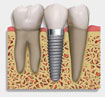 Did you know that dental implants are frequently the best treatment option for replacing missing teeth? Rather than resting on the gum line like removable dentures, or using adjacent teeth as anchors like fixed bridgers, dental implants are long term replacements that your oral and maxillofacial surgeon surgically places in the jawbone.
Call our offices at (831) 636-9808
Our experienced and professional office staff members are here to help you with all your questions.
We are conveniently located in Hollister, California in San Benito County at 890 Sunset Drive, Suite B-1A in Hollister, CA 95023. Our telephone number is (831) 636-9808. For driving instructions, click here.
Refer a patient by sending secure referrals, attach X-rays and other documents and communicate securely with our clinic.
Refer a patient to San Benito Oral Surgery
Para más información llame a nuestra oficina
(831) 636-9808
Bienvenidos a la oficina de Dres. McBride y Carr. Una práctica para el tratamiento de problemas de los dientes, las mandíbulas y encara.
Somos situados en el Condado San Benito en 890 Sunset Drive, B-1A, Hollister, CA 95023.