Facial Trauma
Injury to the face are not as common as they used to be. Accidents and interpersonal violence today are the most common injuries.
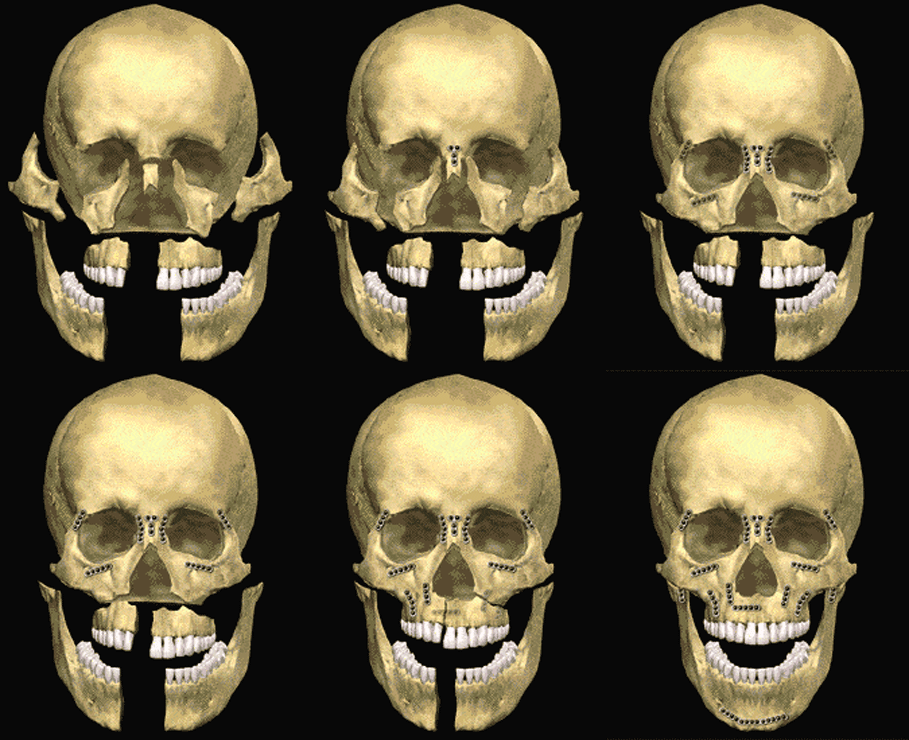
Drs. McBride and Carr are on the staff of Hazel Hawkins Hospital and treat patients with injuries to the face in the emergency room. The treatment involves the suturing of small lacerations in the face, or the repair of bony injuries to the bones of the face. Most injuries are the broken lower and upper jaw bones, but occasionally a patient is seen with a fracture to the cheek bone or the bones of the nose and the orbits. Most of these injuries need to be treated in the hospital, but broken lower jaws are treated in the operating room in our office.
Maxillofacial Trauma
Oral and maxillofacial surgeons are trained, skilled, and uniquely qualified to manage and treat facial trauma.
Dr. Carr is a Board Certified Oral and Maxillofacial Surgeon as well as holding a Medical Degree. Dr. Carr is on staff at your local hospital and provide emergency room coverage for facial injuries including:
- Facial lacerations
- Intra-oral lacerations
- Avulsed (knocked out) teeth
- Fractured facial bones (cheek, nose, or eye socket)
- Fractured jaws (upper and lower jaw)
Injuries to the face, by their very nature, impart a high degree of emotional, as well as physical trauma to patients. The science and art of treating these injuries requires special training involving a "hands-on" experience and an understanding of how the treatment provided will influence the patient's long term function and appearance.
These types of injuries are treated by one of a number of forms of splinting (stabilizing by wiring or bonding teeth together). If a tooth is knocked out, it should be placed in salt water or milk. The sooner the tooth is re-inserted into the dental socket, the better for the survival of the tooth. Therefore, the patient should see a dentist or oral surgeon as soon as possible. Never attempt to wipe the tooth off, since remnants of the ligament which hold the tooth in the jaw are attached and are vital to the success of replanting the tooth. Other dental specialists may be called upon such as endodontist, who may be asked to perform root canal therapy, and/or restorative dentists who may need to repair or rebuild fractured teeth. In the event that injured teeth cannot be saved or repaired, dental implants are often now utilized as replacements for missing teeth.
About Us
Dr. Brian Carr holds a both a Dental Degree and Medical Degree. He is a member of the the American Association of Oral and Maxillofacial Surgeons (AAOMS) and a diplomate of the American Board of Oral & Maxillofacial Surgery (ABOMS). Dr Carr is an Associate Clinical Professor at UCSF and has taught facial trauma reconstruction at Zuckerberg San Francisco General Hospital for several years. Dr. McBride has been practicing oral and maxillofacial surgery in the Hollister, California area for over twenty years. He is also a Clinical Assistant Professor in the Department of Oral and Maxillofacial Surgery at University of California San Francisco.Our staff is highly trained and qualified to handle all of your needs. We invite you to come in for a consultation.
We are here to answer your questions, please give us a call at (831) 636-9808 or please use our contact page.
More Information
 Thanks to research breakthroughs, clinical advances and instrumentation innovations pioneered by skin surgery experts, the majority of cosmetic surgeries is now minimally invasive and requires only local or regional anesthesia. This translates into superior patient safety while reducing the all-important "downtime" and recovery period. In addition, new developments and the latest techniques are constantly enhancing the results of many established skin surgery procedures.
  In just a short time, you can melt the years away from your face, looking natural and refreshed. Dr. Carr can provide temporary improvements, such as botox to more permanent solutions such as a neck lift or facial implants,
 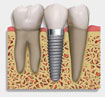 Did you know that dental implants are frequently the best treatment option for replacing missing teeth? Rather than resting on the gum line like removable dentures, or using adjacent teeth as anchors like fixed bridgers, dental implants are long term replacements that your oral and maxillofacial surgeon surgically places in the jawbone.
Call our offices at (831) 636-9808
Our experienced and professional office staff members are here to help you with all your questions.
We are conveniently located in Hollister, California in San Benito County at 890 Sunset Drive, Suite B-1A in Hollister, CA 95023. Our telephone number is (831) 636-9808. For driving instructions, click here.
Refer a patient by sending secure referrals, attach X-rays and other documents and communicate securely with our clinic.
Refer a patient to San Benito Oral Surgery
Para más información llame a nuestra oficina
(831) 636-9808
Bienvenidos a la oficina de Dres. McBride y Carr. Una práctica para el tratamiento de problemas de los dientes, las mandíbulas y encara.
Somos situados en el Condado San Benito en 890 Sunset Drive, B-1A, Hollister, CA 95023.